If you’ve ever left a symphony concert or a long playlist feeling strangely tense — even though the music was beautiful — you’re not imagining it. There’s a hidden reason your brain and ears feel tired: pitch inflation.
Today, almost every orchestra, recording, and streaming service uses the same “standard” tuning: A = 440 Hz. But that wasn’t always the case. The music of Mozart, Beethoven, and Verdi was written for a warmer, lower pitch. Over the past 200 years, the musical world quietly raised the pitch higher and higher in pursuit of brilliance — and we’re still paying the price.
The 19th-Century “Acoustic Arms Race”
Before the 1800s, there was no universal standard. Orchestras and church organs across Europe tuned A anywhere between 415 Hz and 430 Hz. The sound was round, warm, and rich with natural resonance.
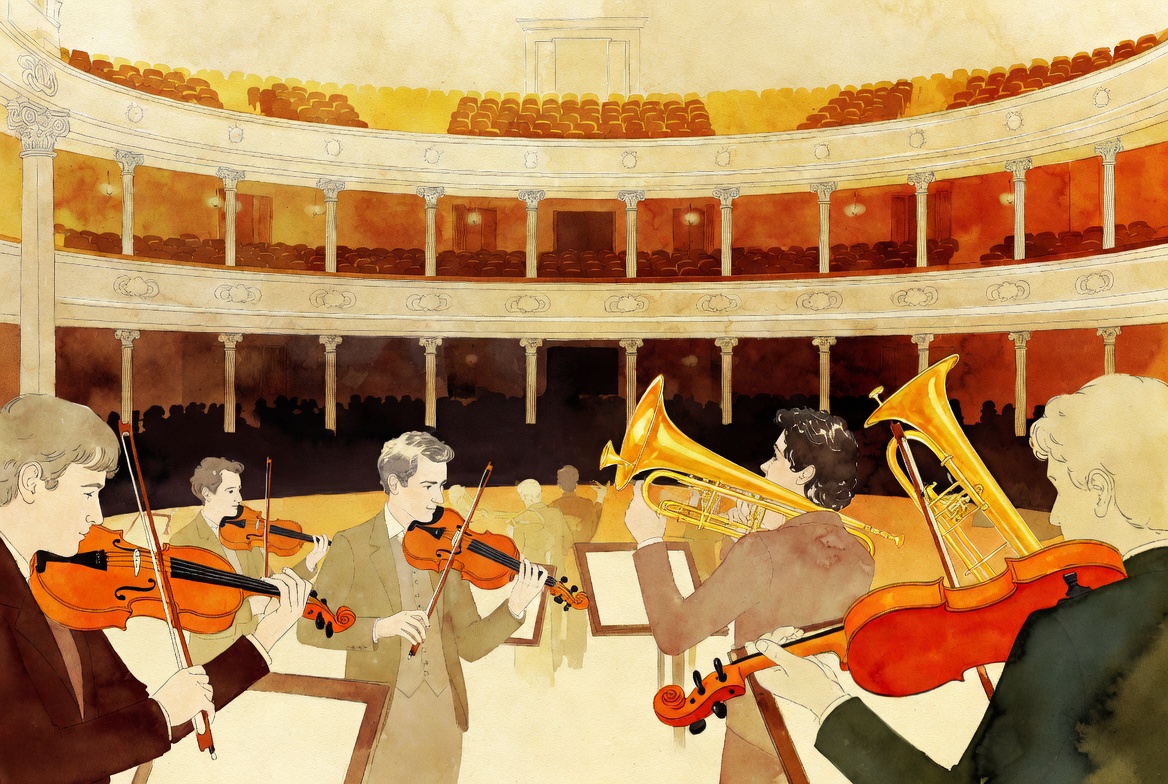
Then the Industrial Revolution arrived. Concert halls grew larger, audiences swelled, and musicians faced a new challenge: making their sound carry to the very back row. Instrument makers and players discovered a simple acoustic trick — raise the pitch slightly, and the sound becomes brighter, sharper, and more penetrating.
What started as a small adjustment became a competition. Orchestras crept from 430 Hz to 435 Hz, then to 440 Hz. Some modern ensembles now push even higher — 442 Hz or 444 Hz — chasing extra “sparkle.” It’s the musical version of the stadium wave: once one person stands up to see better, everyone else has to stand too.
The Hidden Cost of Brilliance
This upward creep delivered the dazzling “brilliance” we expect from modern performances, but it came at a steep price.
Opera singers felt it first. Giuseppe Verdi, one of the greatest opera composers, fiercely opposed the rising pitch. He watched it destroy voices and fought to keep A at 432 Hz — a frequency he believed was more natural and easier on the human voice. That’s why 432 Hz is still called the “Verdi Pitch.”
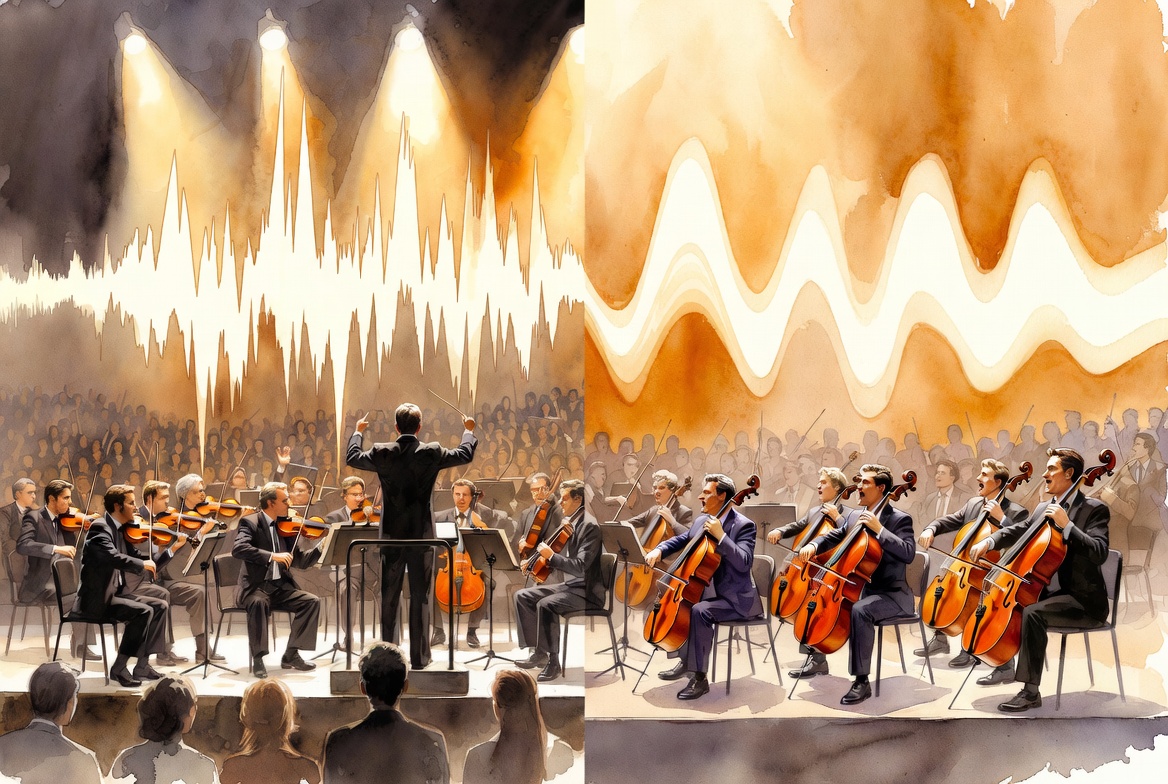
The strain isn’t just physical. Higher frequencies are shorter, denser, and more energetic. In psychoacoustics, they trigger alertness and tension — useful for dramatic stage moments, but exhausting when you’re trying to relax, focus, or fall asleep with music in the background.
A Gentler Alternative: The Return to 432 Hz
If 440 Hz was an industrial compromise for 19th-century concert halls, do we still need it in the age of headphones and streaming?
The answer is no.
Scientific and acoustic research shows that 432 Hz aligns more closely with natural mathematical ratios and the body’s own rhythms. It feels smoother, wider, and more grounding — the auditory equivalent of a deep exhale. Many listeners describe it as “music that lets your nervous system finally relax.”
That’s exactly why ReTune432 exists.
ReTune432 isn’t just another music player. It’s a precise acoustic restoration tool. Using high-fidelity real-time resampling, the app instantly converts any internet radio station or audio source to 432 Hz — without changing speed, rhythm, or losing quality.
- For classical music lovers: Hear the music the way composers originally imagined it — warmer, more resonant, and true to the score.
- For anyone under stress: Turn everyday background music into genuine nervous-system support.
In an already noisy world, we don’t need music that adds more tension. We need sound that brings peace.
Ready to Give Your Ears a Break?
Download ReTune432 from the App Store or Google Play (it’s free to start), enter the code RETUNE432RADIO, and enjoy 2 months of Pro completely free.
Let your music breathe again — the way it was meant to be heard.